Five Florida regions, here is the Southeast
Miami-Dade is close to seventy percent Hispanic, and business gets done in Spanish here as a matter of course...
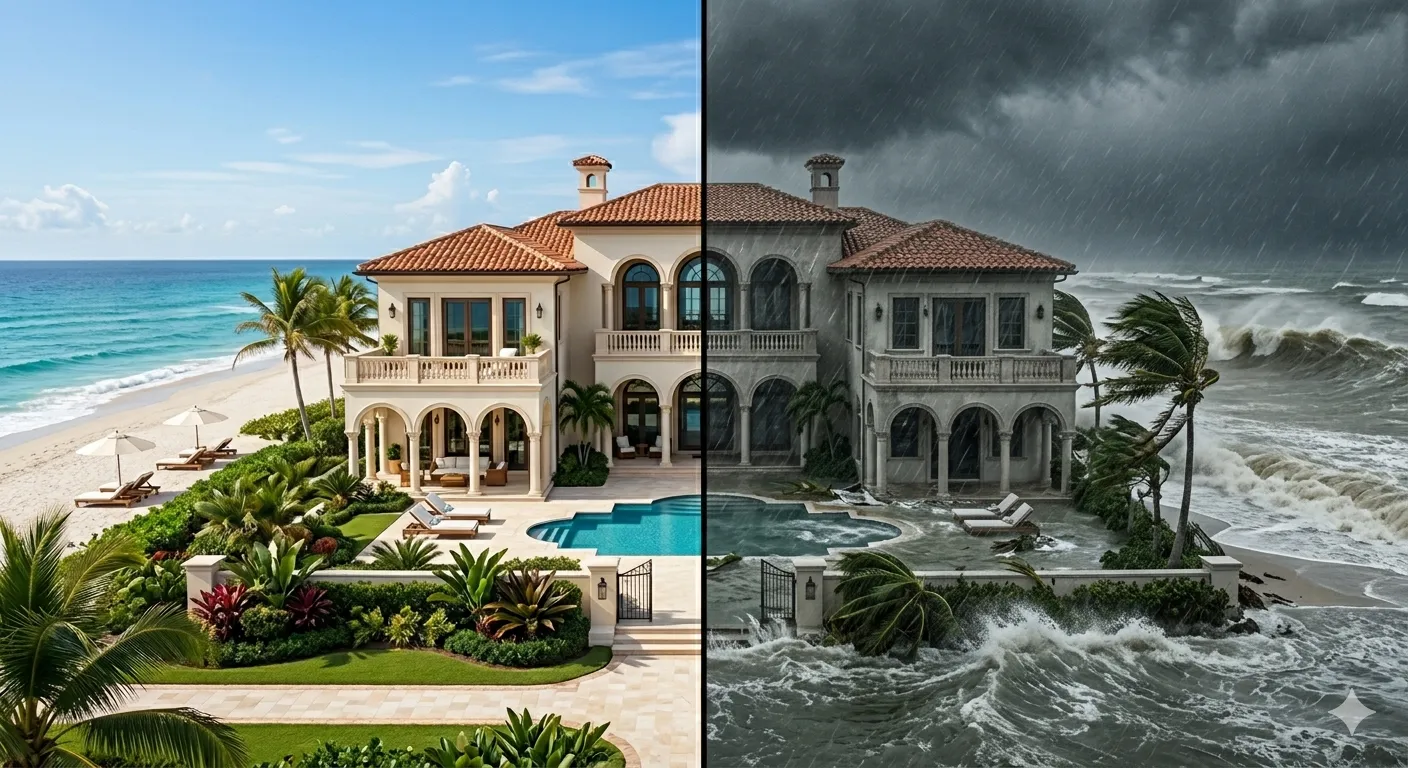
When one of my customers tells me something like “I want to sell my products in Florida” my response always is: Which Florida are we talking about? They usually take it as a joke, until we dive a bit deeper into this fascinating market.
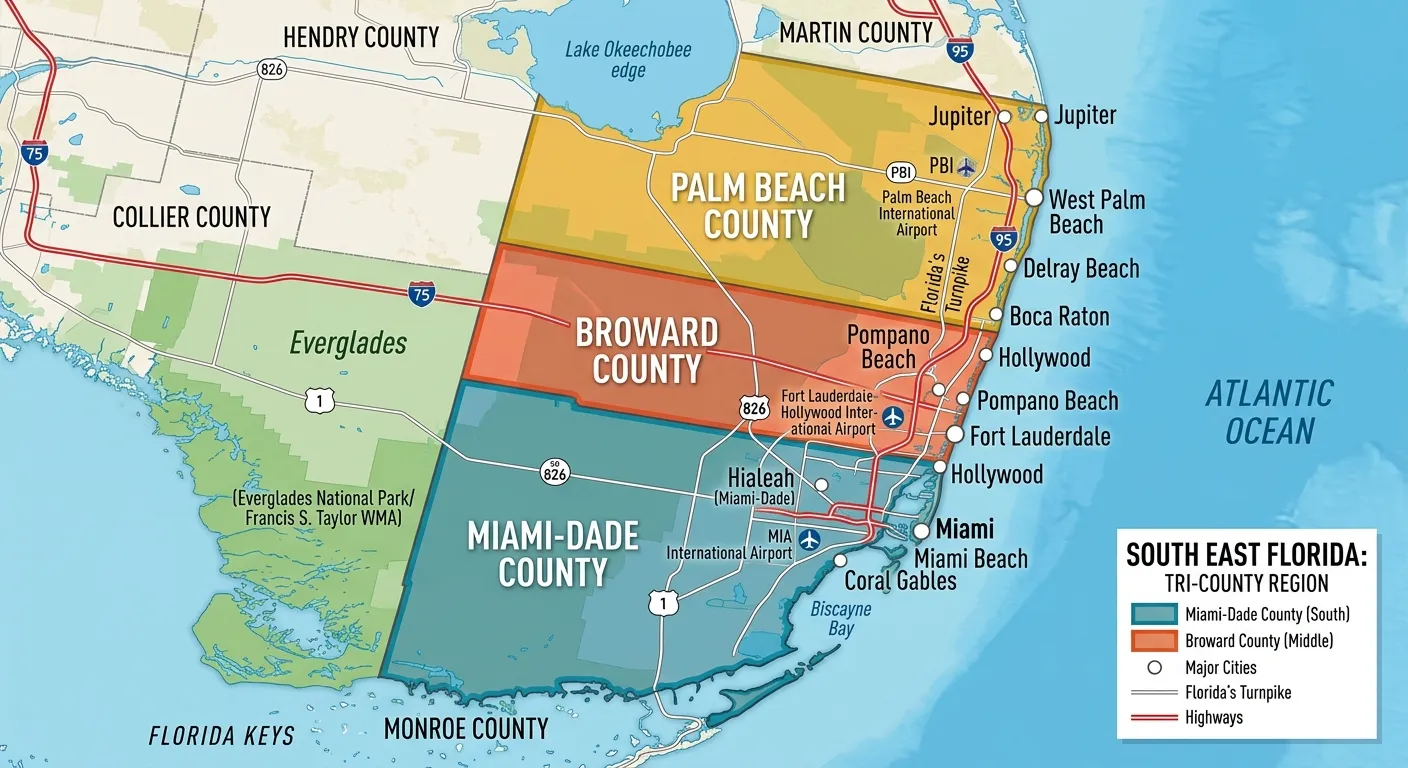
There are at least five different regions in this State: Southeast, Southwest, Central, Northeast, and the Florida Panhandle. Let’s talk about the Southeast region today.
Miami-Dade, Broward, and Palm Beach. Together they form the southeast coast, a strip of land with its own weather, its own rulebook, its own economy, and its own population.
Start with the wind, because the wind here wrote its own law. After Hurricane Andrew flattened a good part of Dade County in 1992, the state created something called the High Velocity Hurricane Zone, and to this day that zone covers Miami-Dade and Broward Counties in their entirety. Structures have to be designed for sustained wind speeds in the hurricane ranges, windows and doors have to be impact rated, and the products that go on the building have to pass test protocols that most of the country doesn’t have.
Then there is the silent killer: water and salt. The air down there carries salt off the ocean and drives it into everything metal. Fasteners, flashing, coil stock, the reinforcing steel inside the concrete itself.
The third force is the climate. There is no hard freeze here, so the things that govern construction up north, the frost line, the freeze-thaw cycling that cracks masonry, the deep footings, none of that matters. What matters instead is relentless heat, ultraviolet light that degrades sealants and shingles years ahead of schedule, and a humidity load so constant that moisture inside a wall moves in the opposite direction it moves in a cold climate. A peculiar example is LEED certifications that dedicate a big part of their efforts to heating the building in an environmentally friendly way. The problem here is cooling along with keeping water and salt out.
Most of the country builds to a national code with some local seasoning. Down there, a product is not real until it carries the right approval, and the gold standard, the Miami-Dade Notice of Acceptance, is widely considered the most demanding product approval in the United States. The other option, growing rapidly in acceptance, is the Florida Building Code with HVHZ.
I have walked foreign manufacturers through this more than once, and the conversation is always the same. They have a good product and a fair price and they assume that is enough, but without the testing, the reports, and the approval in hand, you do not get access to this market.
As expected, insurance on this coast has gone from an expense to a crisis. Carriers are reading those inspection reports and either pricing older buildings out or refusing to write them at all, pushing owners toward the state insurer of last resort. On the construction side, labor has gone scarce and expensive, masonry has become a bottleneck, and the cost of basic materials has multiplied. Some big national homebuilders have retreated hard from Southeast Florida, which is exactly the kind of moment that opens the door for regional and local operators who know how to move. Miami itself, meanwhile, stayed one of the few markets in the country with architects still busy and capital still flowing. So you have a market that is contracting and overheating at the same time, depending on which city you stand in.
The last thing that makes this coast its own country is the people on it, and here again the tri-county splits three ways. Miami-Dade is close to seventy percent Hispanic, and business gets done in Spanish here as a matter of course, the contractor networks, the distributors.
Broward to the north is a different mix, more Caribbean, more Black, more transplant.
Palm Beach is older, whiter, and wealthier, with a buyer who weighs a roofing decision very differently than a buyer in Hialeah does.
I have said for years that the United States is really five or six countries wearing one flag, the way a guy in Bristol, Tennessee, is nothing like a guy in Rhode Island. The southeast Florida coast proves the point at the smallest possible scale. Three counties, one shoreline, and three separate sales motions, three separate price tolerances, three separate cultures deciding what goes on the house.
That is the market in one breath. The ocean writes the physics, Andrew and Surfside wrote the law, the insurance companies write the economics, and Cuba, the Caribbean, and the retirees write the culture. None of it travels well to the next state, and not all of it travels well to the next county.
Stormy waters, that is for sure. But it is hard to stay away from a market of this size. Florida’s roofing market alone runs around three and a half billion dollars a year, close to one in eight roofing dollars spent in the entire country. More than eight out of ten of those dollars go to replacing roofs that already exist, not to new construction, which means the demand does not wait on a building boom. It renews itself every time the sun and the salt and the next storm do their work.
Those companies that can clear the approvals, spec for the conditions, and show up when the storm or the engineer says it is time are set for a series of successful experiences. Mistakes can be costly, but overall it is a very attractive market for those who have learned how to navigate it.
In the next article we will talk about Southwest Florida.
I write when something worth saying happens in global trade. If that’s a conversation you want to be part of, leave your email.