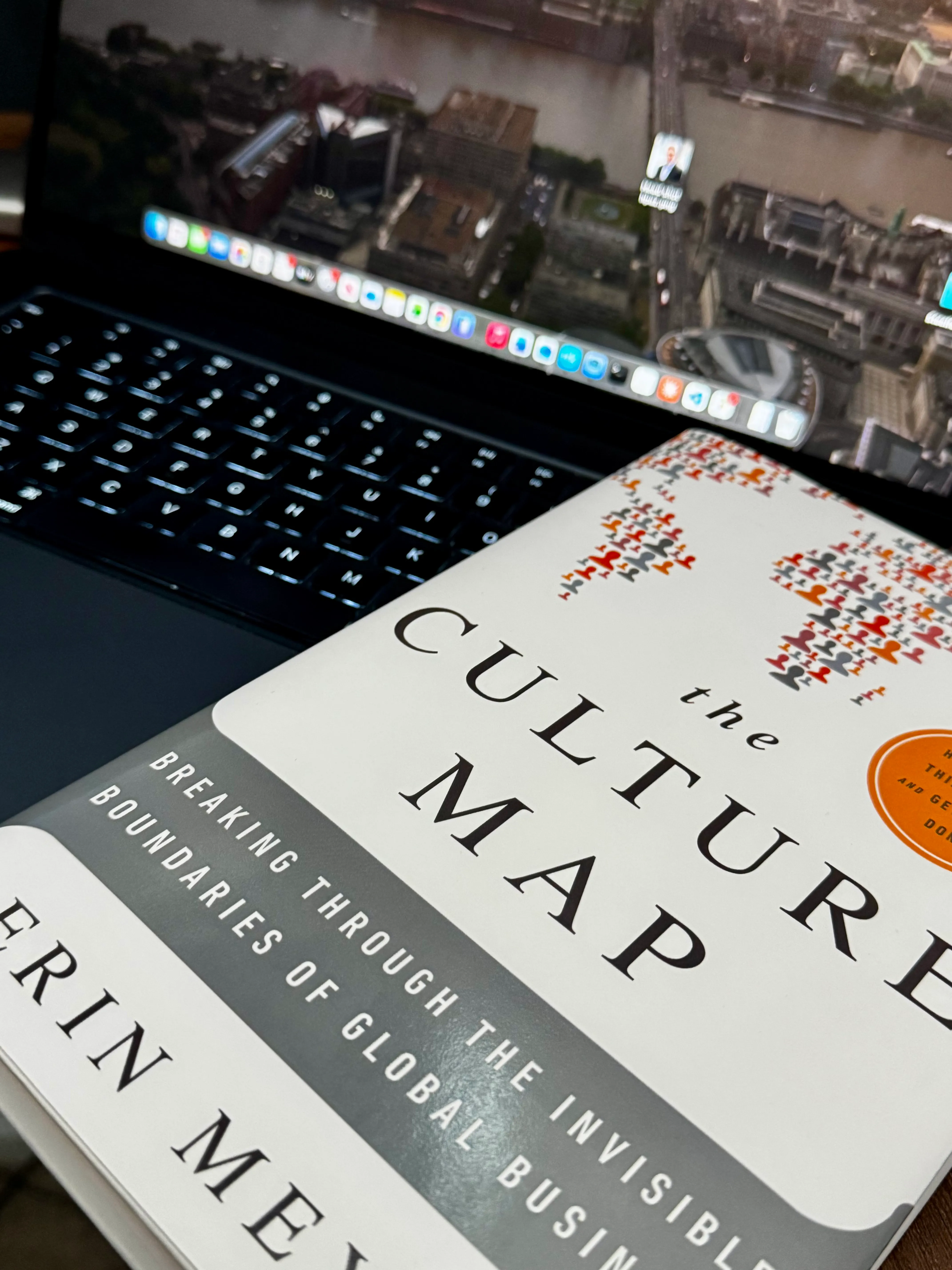
Book - The Culture Map by Erin Meyer
The most dangerous aspect of cultural differences is their invisibility.
My first truly international experience took place during the first few weeks of my MBA studies. I was 25 years old and had spent my life in a small and isolated corner of the planet: Tegucigalpa, Honduras, at a time before cable TV or the internet. At that point in my life, I had been to Mexico and Miami, but I was just a kid when those trips happened, so I spent most of the time inside the protective bubble of my parents. My exposure to other cultures was very limited.
I remember how many misunderstandings we had among each other, ranging from irrelevant and even funny things (“cuero,” for example, means a beautiful lady in my country, while in Colombia it means an ugly lady) to potentially more dangerous complications related to confusing body language or expressions that meant the opposite of the meaning I had assigned to them since birth.
A few years later, when I was negotiating with people from India, China, or Spain, that awareness developed during my years as a student served me well. At the very least, I was aware of the dangers of judging others through the lens of my own culture. And I was also aware of the possibility that they were doing exactly that.
Mistakes were made, and are still made often, but as with any other skill, it gets better with practice.
I am not sure why I walked this path so detached from any theoretical base in the form of courses, certifications, or books. I never really thought about that while I was traveling and negotiating with people from different countries, continents, cultures, races, and backgrounds.
But recently I found a book that can save years of uncomfortable experiences and thousands of dollars in mistakes. The book is called The Culture Map, written by Erin Meyer. It goes beyond the normal academic scope expected from a professor and draws lessons from real-life experience from her time living and working in several countries and continents.

She groups these differences into eight categories covering different aspects of normal business engagements where cultural traps are more acute and potentially more damaging if handled incorrectly. Of those categories, the ones related to trust are, from my perspective, the most important:
- Communicating: This one is hard enough even among people with the same mother tongue and similar backgrounds.
- Persuading: The thin line between persuasion and manipulation has to be respected here.
- Leading: The risk here is being perceived as too weak or too authoritarian because of differences in cultural background.
- Trusting: As she puts it beautifully, trust can come from the head or from the heart.
With funny and relatable examples, she illustrates each point and gives you a practical tool to at least have some mental framework to work with when you embark on an international expansion endeavor.
It is not a substitute for real-life experience, but it can definitely enhance the lessons learned from it and could serve as a “third wheel” for those who are just getting started in the craft.
Remember, the goal is never perfection, just quality. And in the pursuit of high-quality international negotiations, this book can be really helpful.
I write when something worth saying happens in global trade. If that’s a conversation you want to be part of, leave your email.